
 0-1
0-1 1+
1+ 2+
2+ 3+
3+ 4+
4+ 5+
5+
Have you ever watched your toddler pick up a crayon and immediately snap it? Or try to pat the cat, only to do it a little too roughly?
It is easy to get frustrated, but it’s important to remember: Control is not innate. It is learned.
To the untrained eye, a toddler hammering a peg looks like loud, simple play. But beneath the surface, a complex neurological process is taking place. If we want our children to develop finesse, we have to give them the right tools to solve the problem of “Force Calibration.”
Here is why the Qtoys Pound a Peg is more than just a toy—it is a lesson in physics, anatomy, and control.
The Problem: The “Plastic” Trap
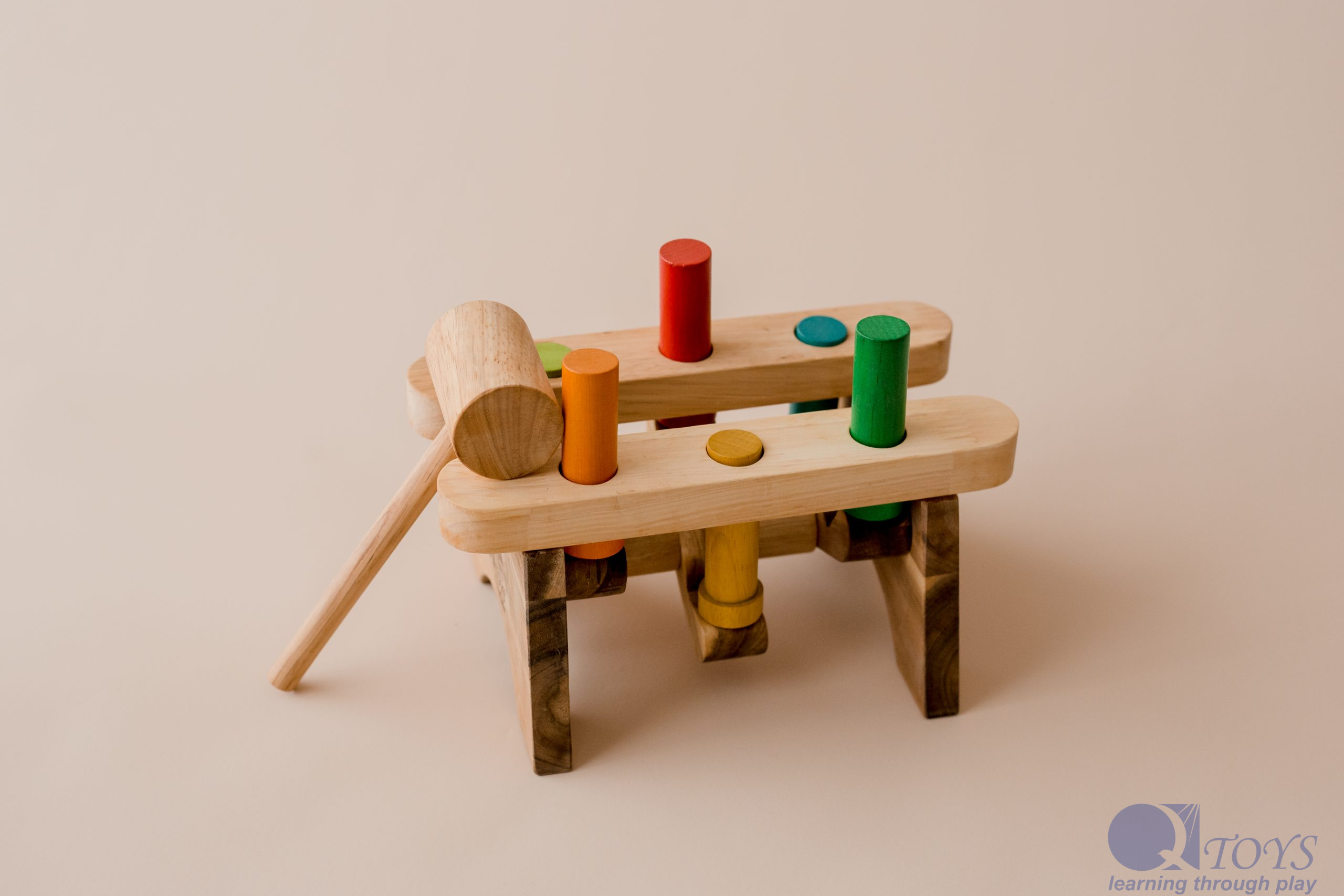 Many modern toys are made of hollow, lightweight plastic. When a child picks up a plastic hammer and strikes a surface, there is very little feedback. The hammer is too light to require effort, and the impact doesn’t send a signal back to the body.
Without this feedback, the brain never learns how much strength is actually needed. This delays the development of Proprioception—the brain’s ability to sense movement, action, and location.
The Solution: True Weight and Resistance
The Qtoys Pound a Peg is designed to solve this sensory gap. Unlike its plastic counterparts, the solid Acacia hammer provides weighted resistance.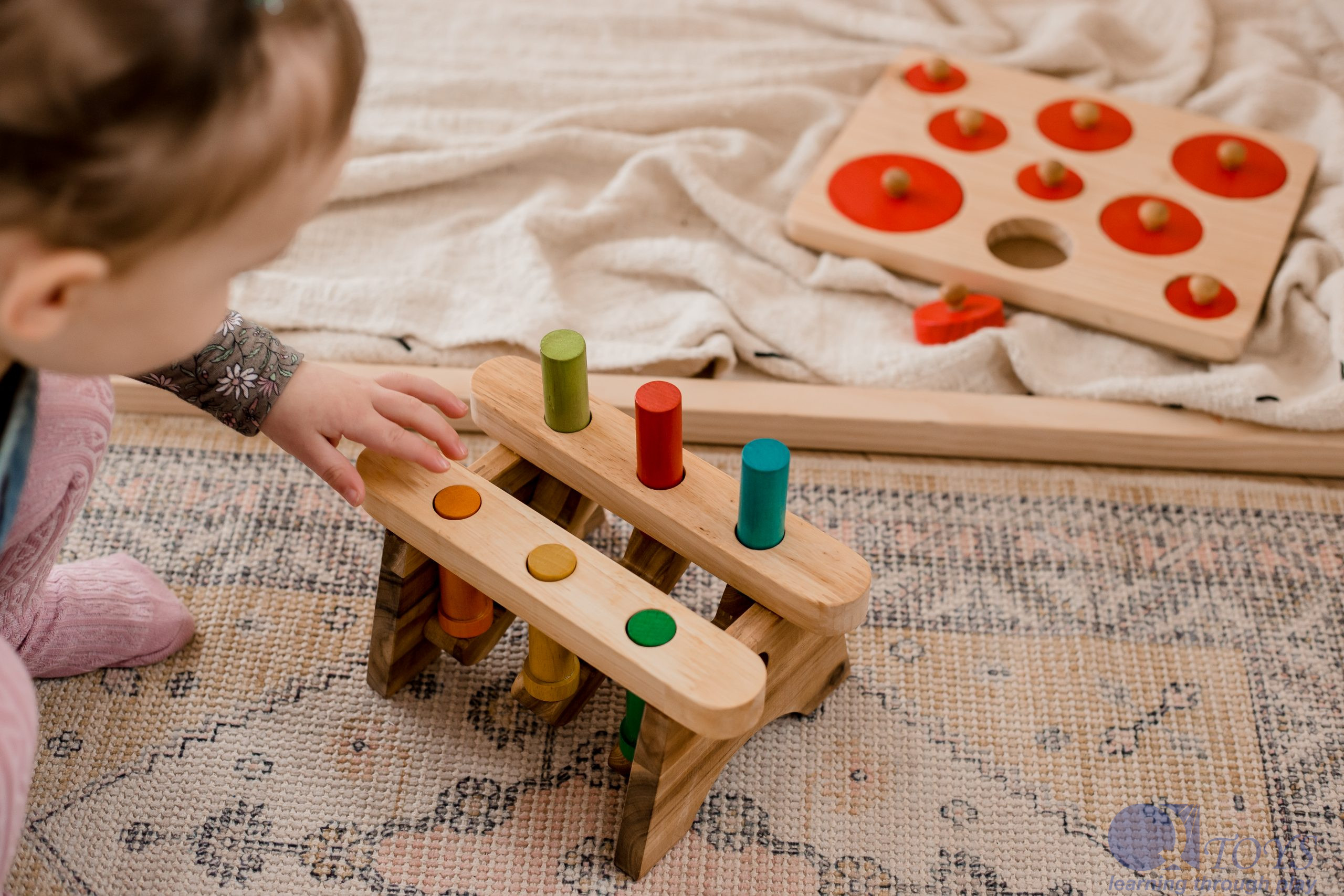
“When the child strikes the peg, they receive an immediate vibration up the arm, signaling to the brain exactly how much force was required.”
This is Force Calibration. It is the physical precursor to essential life skills. Before a child can hold a pencil gently enough to write without breaking the lead, or hold a glass without crushing it, they must first master the large-scale sensation of force through their arm and shoulder.
Why Educators Love This Tool
The Qtoys Pound a Peg is a “Proprioception & Motor Control Bench” disguised as a fun activity. Here is the breakdown of the developmental benefits:
-
Neuromuscular Feedback: The density of the timber provides “true weight.” This teaches the muscles to gauge appropriate force, effectively “tuning” the child’s motor system.
-
Visual-Motor Integration: This is the gym for the brain. It forces synchronization between the visual cortex (aiming at the peg) and the motor cortex (swinging the hammer).
-
Satisfying the “Trajectory Schema”: Toddlers have a developmental urge to exert influence on their environment. This tool allows them to safely explore the concept of “I act, and the world changes” by physically moving the pegs down.
-
Cross-Lateral Movement: To hold the bench with one hand and hammer with the other often requires crossing the midline of the body. This is a critical milestone that strengthens communication between the left and right hemispheres of the brain.
If we want our children to be gentle, precise, and controlled, we must give them toys that offer genuine feedback. The Qtoys Pound a Peg turns raw energy into refined skill, one strike at a time.