
 0-1
0-1 1+
1+ 2+
2+ 3+
3+ 4+
4+ 5+
5+
Picture this scene: It’s 5:00 PM. You walk into the living room and it looks like a toy tornado touched down. Lego bricks are embedded in the rug, plastic dinosaurs are trapped under the sofa, and the giant, deep toy chest in the corner is overflowing with a tangled mess of miscellaneous items.
Your child isn’t actually playing with any of it. They are sitting in the middle of the chaos, looking overwhelmed and bored.
As parents, our instinct to tidy up often leads us to the quickest solution: the giant toy box. It’s easy to just scoop everything up and toss it into a deep bin until the lid barely closes. Out of sight, out of mind, right?
Wrong. At least, not if we care about fostering our child’s focus, independence, and creativity.
While the mega-toy box might seem like a cleaning hack, it’s actually a hindrance to child development. It’s time to ditch the “black hole” bin and embrace the developmental magic of open shelving.
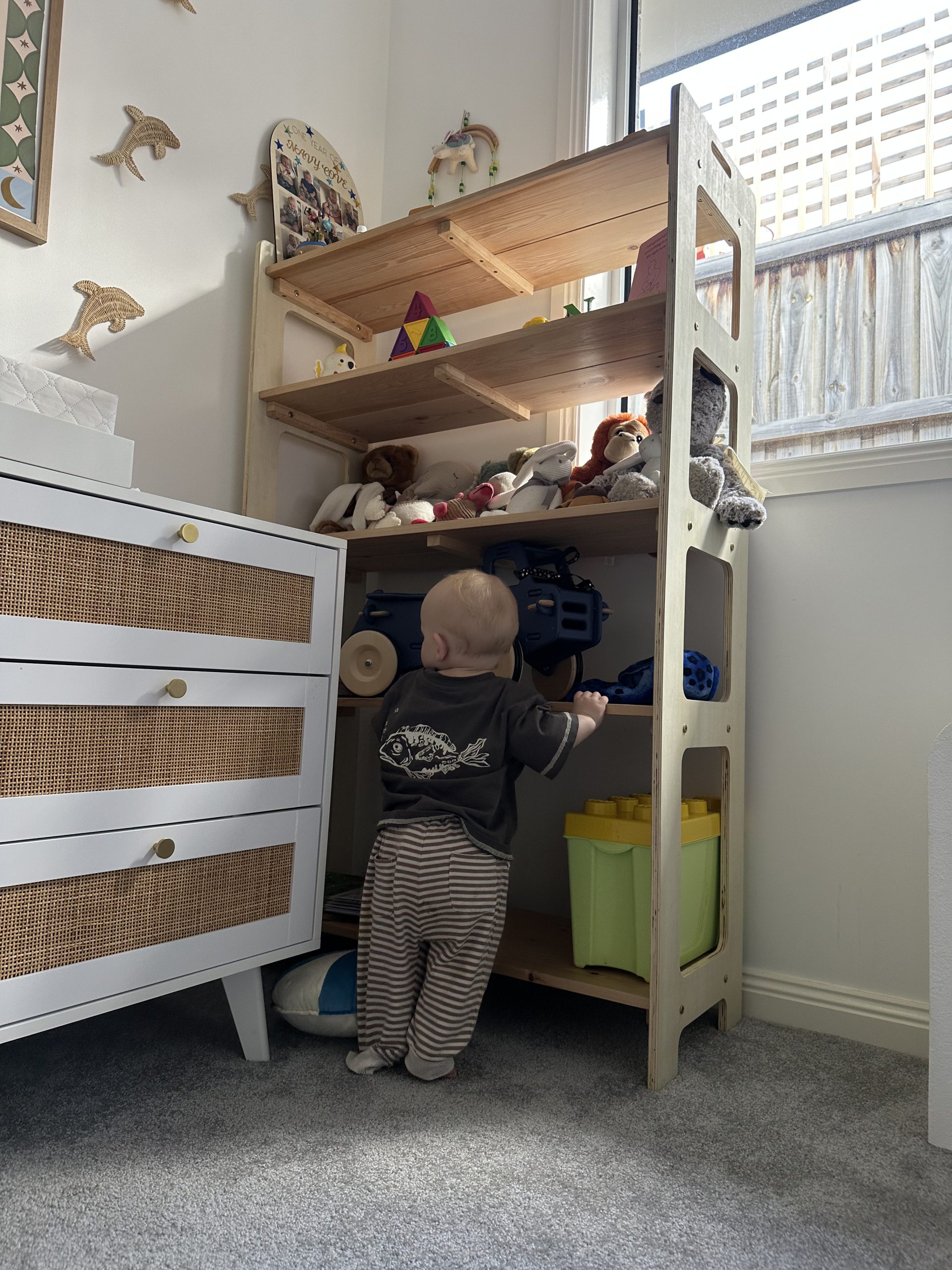
The Problem with the Deep Toy Box
Think about your own closet. If all your clothes—socks, sweaters, jeans, and formal wear—were tossed indiscriminately into one giant, deep trunk, how would you get dressed in the morning? You’d have to dig, dump, and excavation-hunt for a matching pair of socks. By the time you found them, your room would be a mess again, and you’d be frustrated.
This is what a deep toy box does to a child.
When toys are buried, they cease to exist in the child’s mind. To find anything, they must dump everything. This leads to:
- Overwhelm, Not Play: The act of dumping the toys becomes the activity, rather than playing with the toys themselves. Once the floor is covered in a mountain of plastic, the visual noise is too much, and they often walk away.
- Killed Creativity: Deep boxes don’t invite connection. A child can’t see that the wooden blocks might go well with the toy farm animals if both are buried under stuffed animals.
- Devaluation of Belongings: When toys are tossed recklessly into a bin, it teaches children that their possessions don’t deserve care or respect. Broken pieces get lost at the bottom, creating a graveyard of forgotten toys.
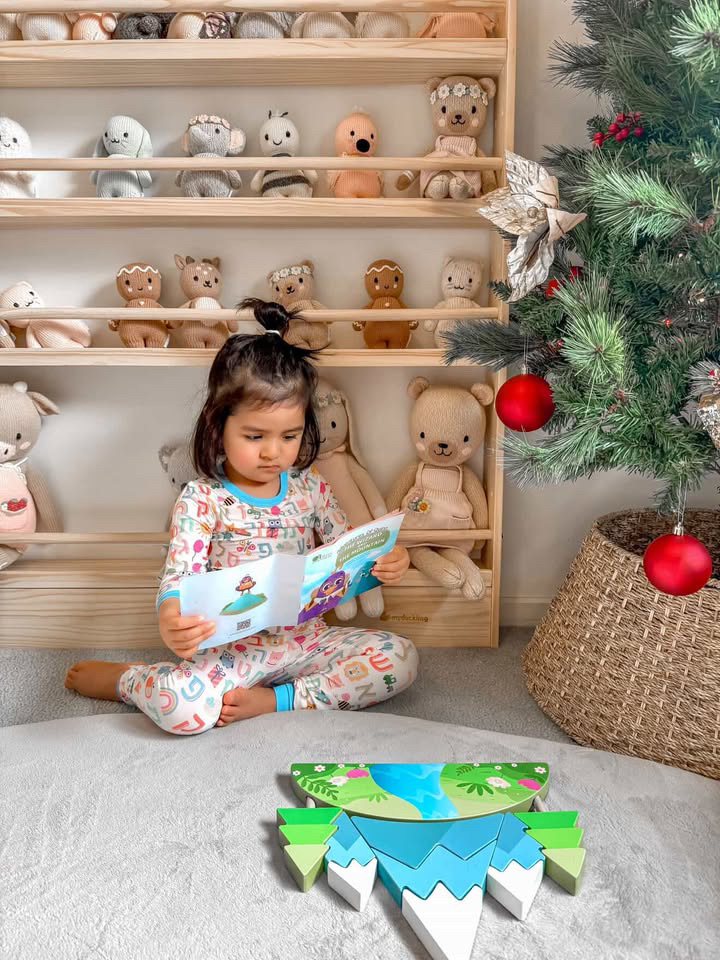
The Power of Open Shelves: An Invitation to Play
In contrast, open shelves create what Montessori educators call a “prepared environment.” It is a space curated to foster independence and focus.
When toys are displayed neatly on accessible shelves, with space between them, the dynamic shifts entirely:
- The Invitation: A puzzle sitting completed on a low shelf literally invites the child: “Come take me apart and put me back together.” A neat row of trucks invites them to start driving. The visual cue sparks the play idea.
- Deep Focus: Because they aren’t overwhelmed by clutter, a child can select one thing, take it to their play space, and engage deeply with it. They aren’t distracted by digging for the next thing.
- Order and Responsibility: Open shelves have a clear beginning and end. Every toy has a dedicated “home.” This makes cleanup easier and teaches the child the responsibility of returning an item to its rightful spot.
Implementing the Change with Qtoys
Making the switch from bins to shelves doesn’t mean you need ugly, industrial wire racking. We want beauty and function that respects the child’s size.
This is why we have created high-quality, aesthetically pleasing storage solutions, such as our beautifully crafted wooden furniture that fit perfectly into a home environment while serving distinct developmental needs.
Here is how to set up a successful shelf-based system using three key Qtoys pieces:
- The Purest Foundation: The Qtoys Montessori Shelf
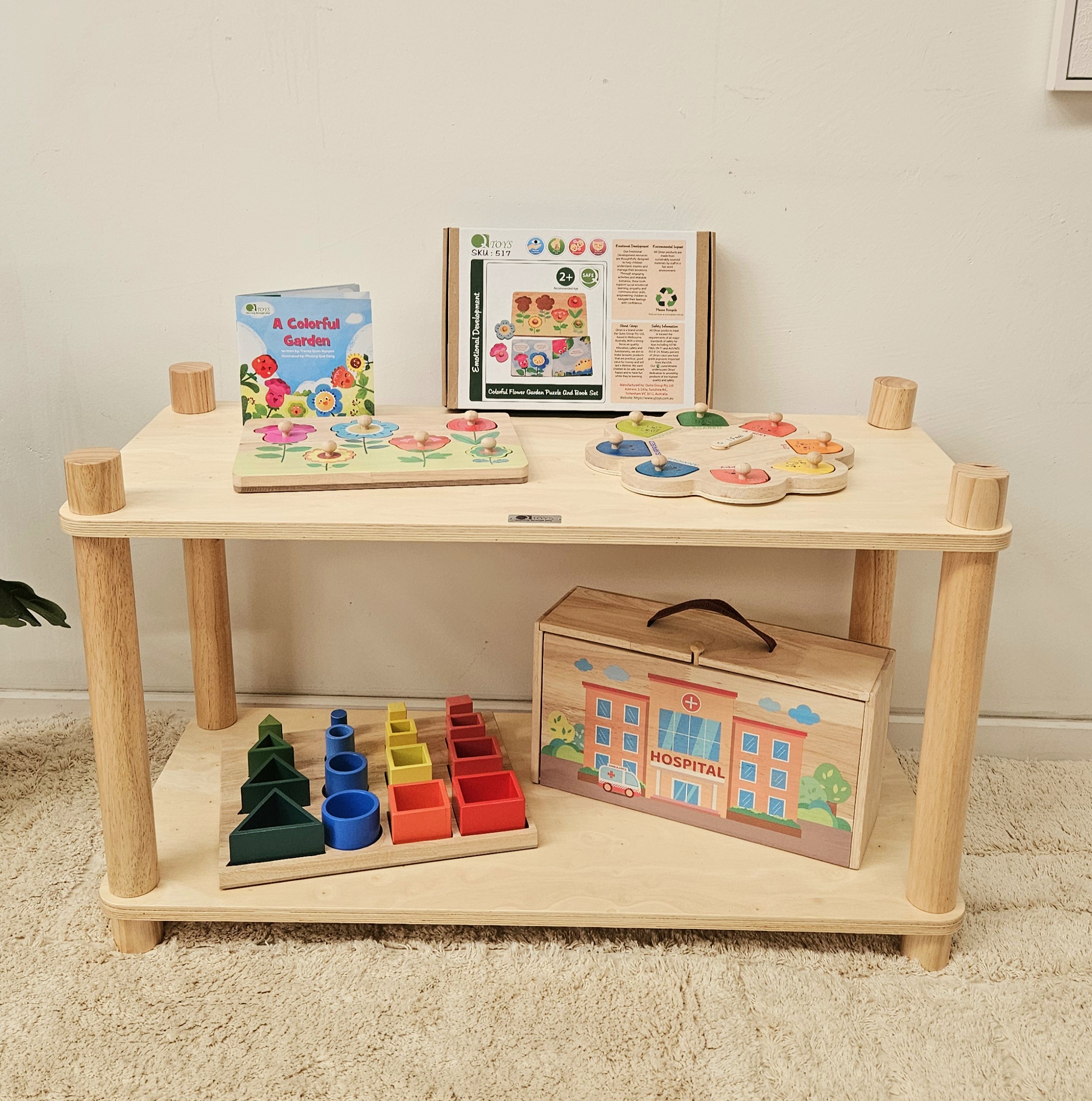
If you have a toddler or are just starting with open shelving, the standard Qtoys Montessori Shelf is the ideal foundation.
This shelf is designed low to the ground, ensuring that even the youngest crawlers and cruisers can see and reach their materials independently. It is completely open—no backs, no sides, no hidden corners. It offers maximum visibility, turning every toy placed upon it into a clear, irresistible invitation to play. It is simplicity and function at its best.
- The Versatile Combo: The Qtoys Shelf with Drawers
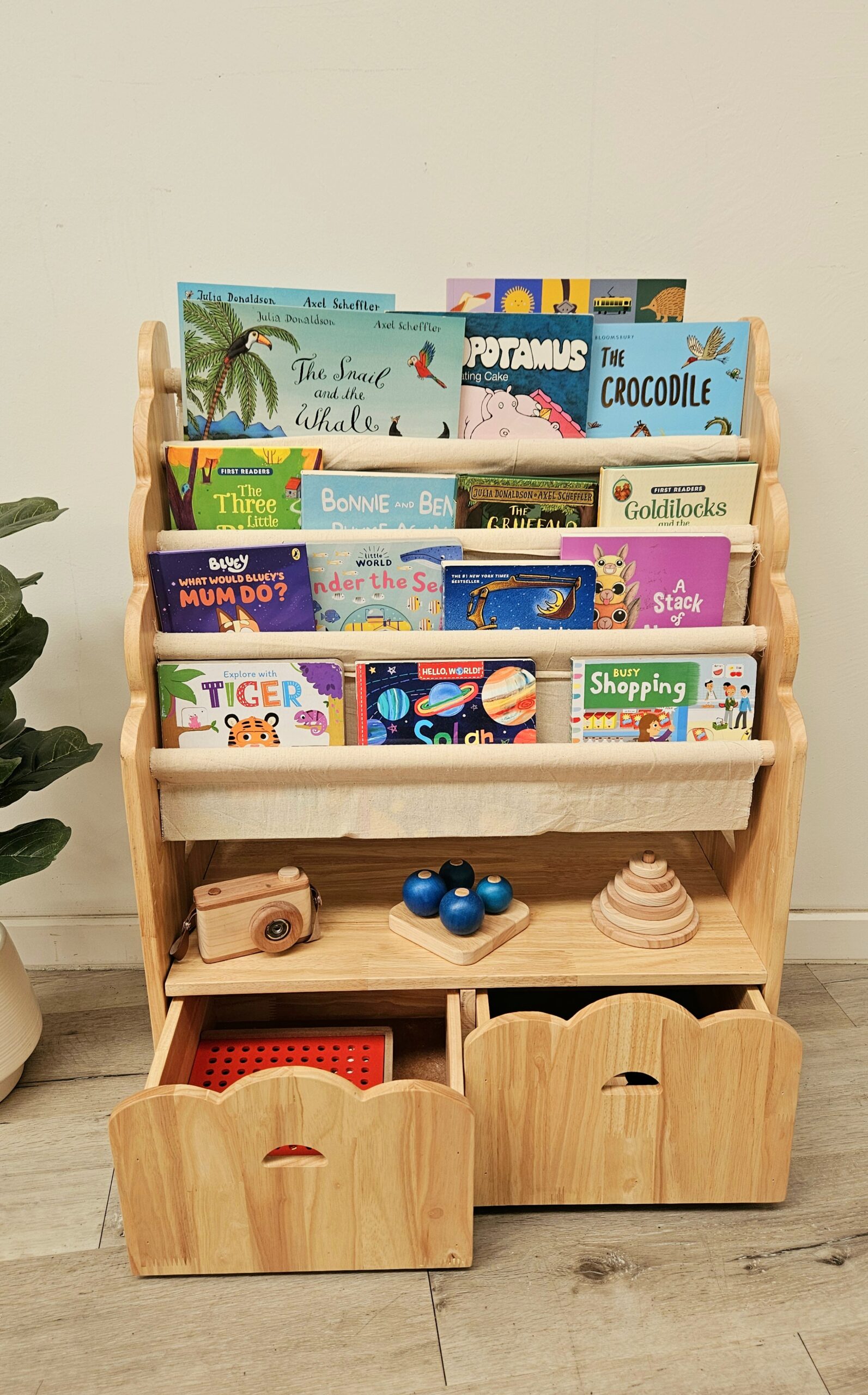
As your child grows, or if you have many multi-piece sets, the Qtoys Shelf with Drawers becomes a game-changer. It offers the best of both worlds: open display and curated concealment.
Use the open top surfaces to display “high-value” toys that require concentration—like a stacking tower or a shape sorter. Use the drawers beneath to store multi-piece sets that need to be kept together but can look cluttered on an open shelf. Think LEGO bricks, a collection of small wooden animals, or art supplies. The drawers allow independent access without visual chaos.
- The Organizer: Qtoys Crates
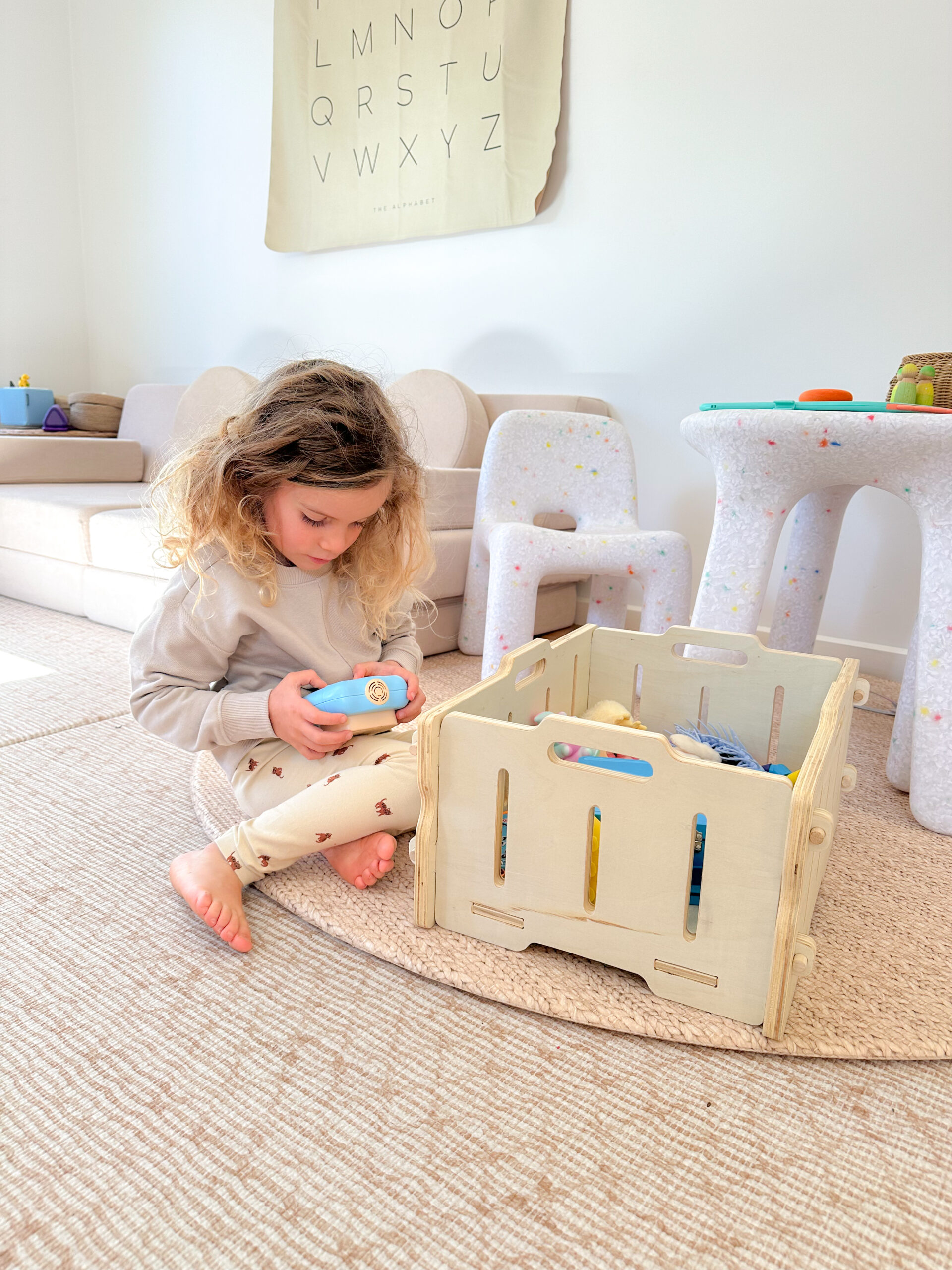
Open shelving doesn’t mean you can’t have any containment. Small pieces need corralling on the shelves. But instead of a deep, opaque bin, opt for shallow, accessible storage like the Qtoys crates.
These low-profile wooden crates fit perfectly on Qtoys shelves and are ideal for categorizing. Have one crate specifically for wooden vehicles, and another for play food. Because they are shallow, the child can easily see what is inside without dumping. Because they are sturdy and portable, the child can lift the entire crate and bring it to the rug to play, then return it when finished.

Less Stuff, More Play
The hardest part of switching to open shelves is realizing you cannot have every single toy you own out at once. And that’s a good thing.
If your shelves are bursting, it’s time for a toy rotation. Pack 60% of the toys away in a closet. Leave out only what fits neatly on your Qtoys shelves with breathing room around them.
When you notice your child getting bored, swap the toys on the shelf with the ones in the closet. It will feel like Christmas morning all over again.
By ditching the deep box and embracing open shelving, you aren’t just organizing your home; you are organizing your child’s mind, inviting them into deeper, calmer, and more creative play.