 0-1
0-1 1+
1+ 2+
2+ 3+
3+ 4+
4+ 5+
5+
The first twelve months of life are perhaps the most profound period of human development. Your baby transforms from a tiny, reflex-driven newborn into a curious, mobile, and interactive “Discoverer.”
During this stage, learning isn’t happening in a classroom; it’s happening through every touch, taste, sound, and movement. The Discoverer’s primary mission is to make sense of the physical world, and their primary tools are their senses and their rapidly developing hands.
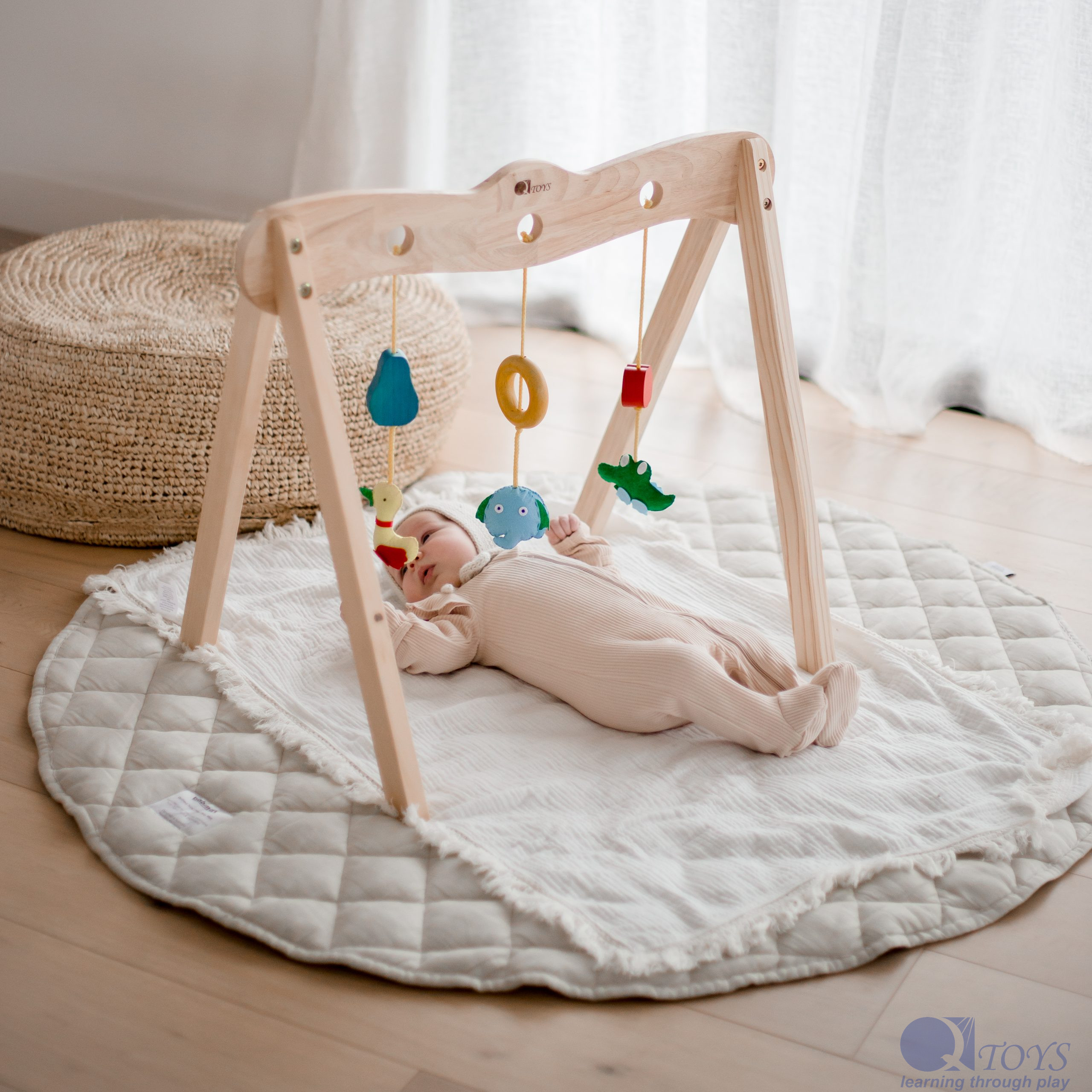
Wooden Baby Gym
Choosing the right playthings during this delicate phase is crucial. We need materials that are safe for inevitable “mouthing,” rich in varied textures, and designed to support the progression from a reflexive clench to a precise pincer grasp. This is where Qtoys, with their commitment to natural, sustainable, and developmentally appropriate wooden toys, becomes an invaluable partner in your baby’s growth.
Here is how the journey of The Discoverer unfolds, and how Qtoys supports these vital milestones
Phase 1: The Awakening Senses (0–6 Months)
In the early months, your baby’s world is immediate and sensory. Their vision is blurring, developing from seeing high-contrast patterns to tracking moving objects. Their hands start tightly clenched due to the palmar reflex, but gradually, they begin to bat at hanging objects and eventually open their hands to reach.
The most important avenue for learning here is the mouth. The mouth has more nerve endings per square millimeter than almost any other part of the body. When a baby puts a toy in their mouth, they are essentially “reading” it—learning about its shape, texture, and temperature.
The Qtoys Advantage: Because mouthing is essential to learning at this stage, the material of the toy matters immensely. Plastic toys often offer a uniform, slick texture. Qtoys, crafted from sustainable timber with non-toxic finishes, offer a warm, varied tactile experience. The grain of the wood stimulates the receptors in the mouth and fingertips in a way synthetic materials cannot.
Recommended Qtoys for Phase 1:
- Simple Wooden Grasping Rattles or Ring or star Rattles: These are designed for tiny hands that are just learning to voluntarily hold on. They are lightweight, easy to hook fingers around, and safe for vigorous gumming. The gentle sound of wood clicking against wood is calming, rather than overstimulating.
Phase 2: The Power of the Grasp (6–9 Months)
Around the half-year mark, The Discoverer becomes an active agent. The “palmar grasp” (raking objects with the whole hand) is strong. They are learning to transfer items from one hand to the other—a major neurological milestone requiring both hemispheres of the brain to communicate.

Dual Discs
This is also the golden age of “cause and effect.” They realize: “If I shake this, it makes a noise. If I bang this on the floor, it makes a bigger noise.”
The Qtoys Advantage: Qtoys designs are durable enough to withstand the “banging phase.” They provide clear, satisfying feedback to the child’s actions, reinforcing their understanding that they can impact their environment.
Recommended Qtoys for Phase 2:
- Cage Rattles , Candy Rattles, Cube rattles or Mini Rainmakers: These toys reward movement with sound. A wooden cage rattle with a bell inside is fascinating at this age; the baby can see what is making the noise, connecting sight and sound, while practicing their grip.

-
- Phase 3: Mastering Precision and Persistence (9–12 Months)
As The Discoverer approaches their first birthday, a marvelous refinement occurs. The clumsy whole-hand grab evolves into the delicate “pincer grasp”—using the thumb and forefinger to pick up small items (like that speck of dust you missed on the carpet!).

Cognitively, they are tackling “object permanence”—the understanding that things still exist even when they can’t be seen. This is why dropping things off the highchair becomes a favorite game; they are testing if the spoon will come back.
The Qtoys Advantage: Qtoys leans heavily into Montessori principles, which shine during this phase. The toys are designed to isolate a single skill, allowing the baby to focus without distraction. They are “self-correcting,” meaning the child can see their own mistake and try again, fostering independence and persistence.
 Recommended Qtoys for Phase 3:
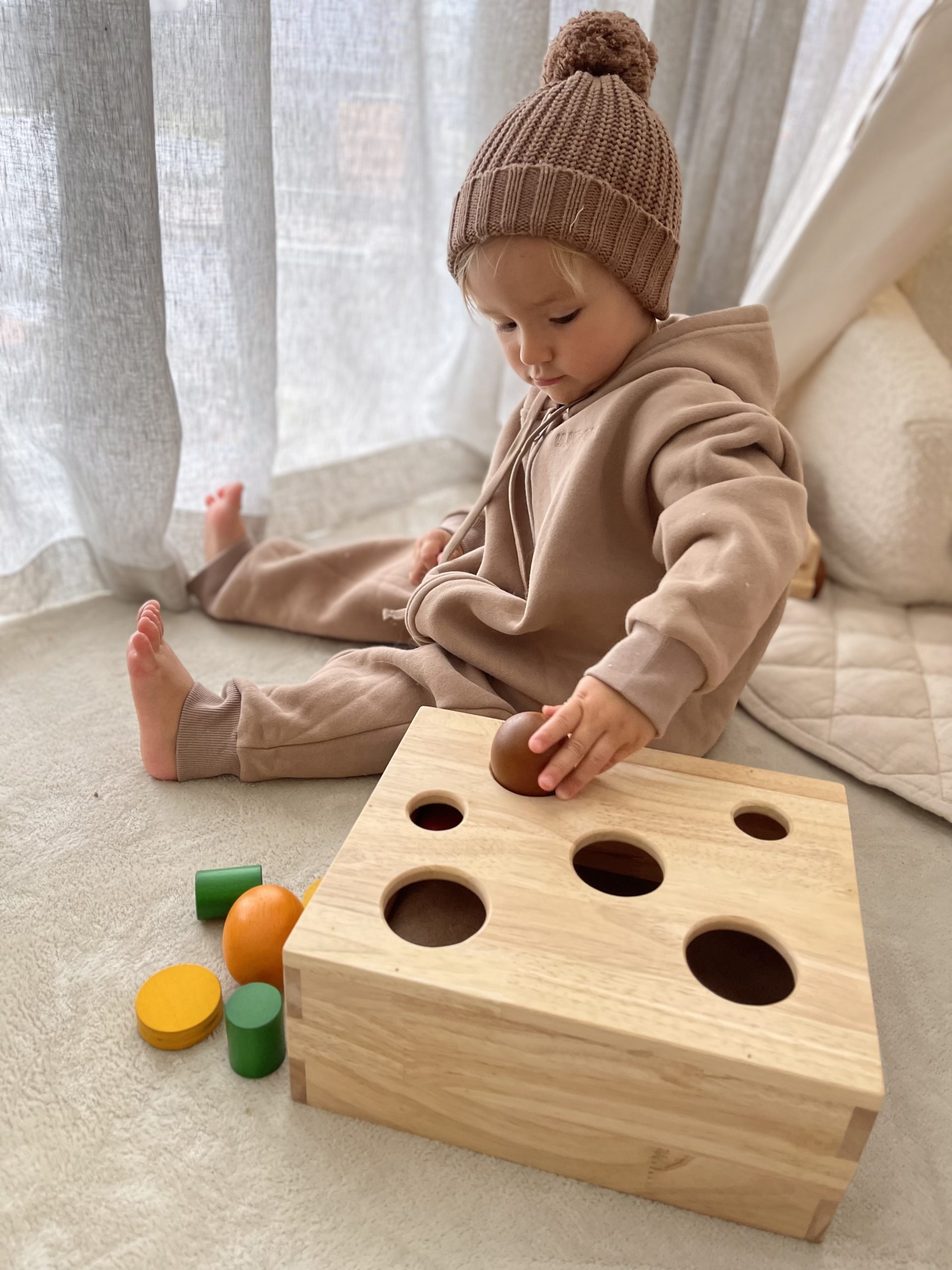
- The Object Permanence Box: This is a quintessential toy for the 9-12 month old. It involves dropping a ball into a hole and watching it roll out into a tray. It perfectly targets the release of a grasp (which is harder than holding on!) and teaches that the ball hasn’t disappeared forever.
- Simple Single-Shape Sorters or Vertical Stackers: A base with a single thick dowel and a few large, chunky rings is perfect right now. It requires hand-eye coordination and the precise use of the evolving grasp to get the ring over the pole.
Conclusion
The first year is a whirlwind of development. By understanding that your baby is a “Discoverer” whose work is sensory exploration and mastering their own hands, you can provide an environment that aids that work. Qtoys offers beautiful, safe, and purposeful tools
- Phase 3: Mastering Precision and Persistence (9–12 Months)