
 0-1
0-1 1+
1+ 2+
2+ 3+
3+ 4+
4+ 5+
5+
In the world of early childhood education, there is a powerful idea that the best teacher a child can have is often… themselves.
At QToys, our mission has always been to foster a “self-learning attitude”—a mindset where children actively seek knowledge rather than passively waiting to be taught. This modern mission aligns perfectly with one of the most famous concepts in history: Maria Montessori’s principle of “Auto-Education”.
But what does this actually look like in the playroom? And how can a simple wooden toy replace a lesson plan?
The Philosophy: “Help Me Do It Myself”
 Maria Montessori believed that children have an innate drive to learn. She coined the term Auto-Education (or self-education) to describe the process where a child, interacting with a “prepared environment,” teaches themselves.
QToys mirrors this with a mission to build “self-learning skills” for the information age. Both philosophies agree on one thing: Real confidence comes from internal discovery, not external correction.
When an adult corrects a child (“No, that block goes there”), the child learns to look to the adult for answers. When a toy corrects a child, the child learns to look at the problem and solve it.
The Mechanism: The “Control of Error”
The secret to auto-education is a design feature called the Control of Error. This means the toy is designed in such a way that it physically shows the child if they have made a mistake. No adult needs to step in; the material itself provides the feedback.
Here is how QToys products demonstrate this powerful Montessori concept:
1. Mathematical Truth: The Circle Fraction Puzzle
In a traditional classroom, a child might memorize that “two halves make a whole” and get a red checkmark on a worksheet if they remember it.
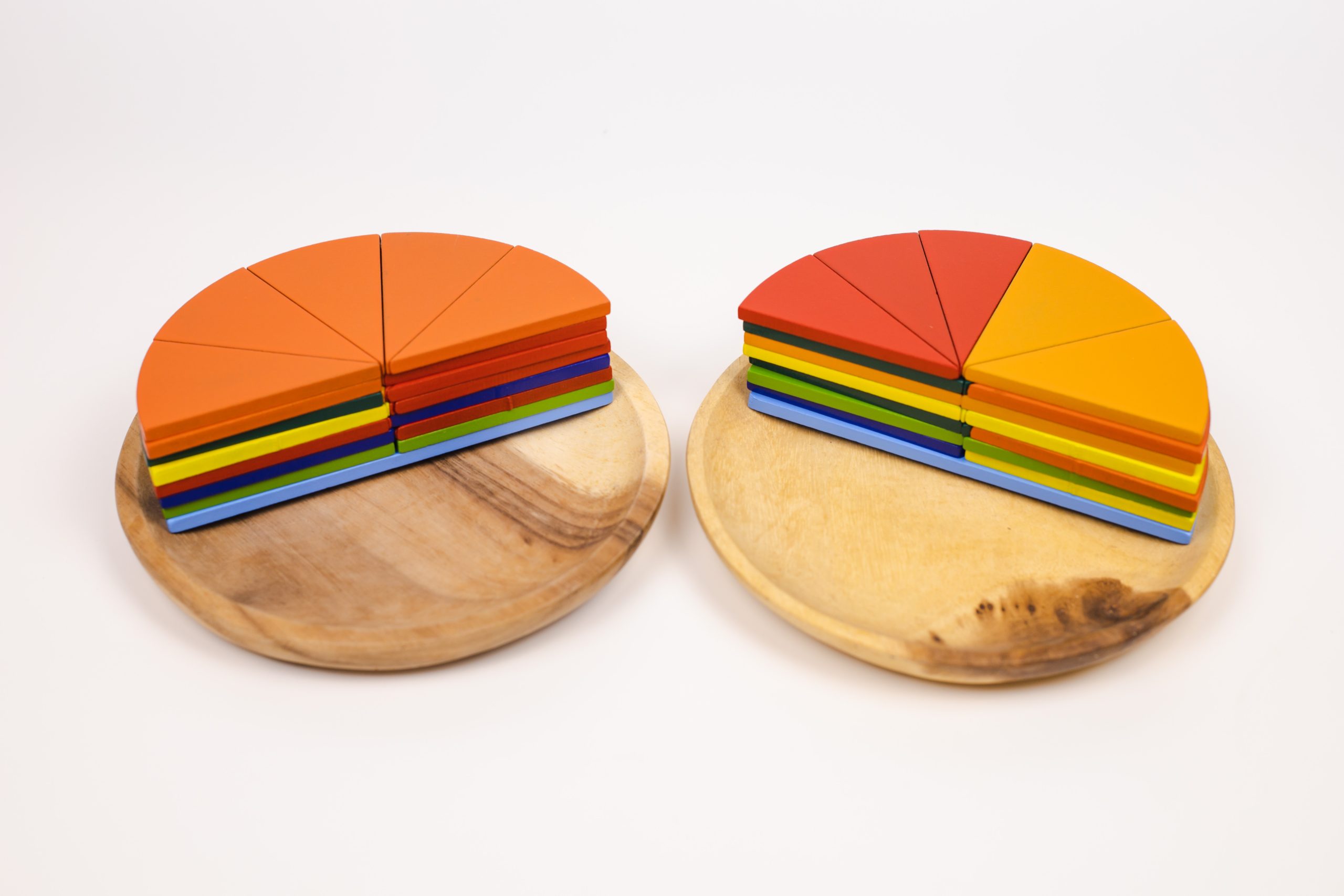
With the QToys Circle Fraction Puzzle or Watermelon Fraction Set, the learning is physical.
-
The Activity: The child tries to fit the pieces back into the circular tray.
-
The Auto-Education: If a child tries to force a “1/3” piece into a space meant for a “1/4” piece, it simply won’t fit. The wood blocks the action.
-
The Result: The child pauses, analyzes the size difference, and tries again. They are self-learning the concept of fractions through geometry, without a single word from a parent.
2. Spatial Logic: The 3D Sorting and Nesting Board
Spatial awareness is difficult to teach verbally. You cannot easily explain “volume” to a toddler. They have to feel it.
-
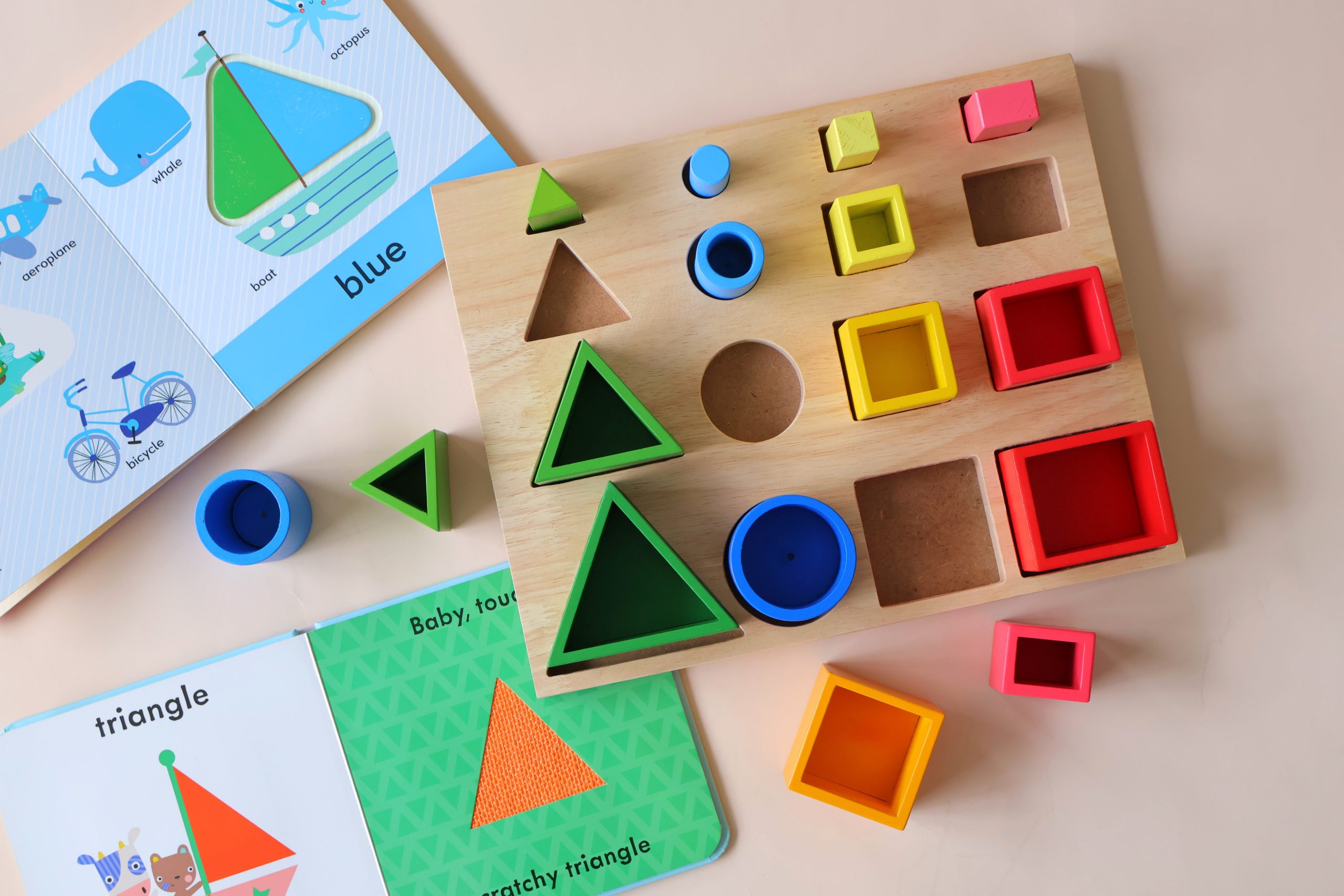
The Activity: The child attempts to stack or nest boxes and shapes of varying sizes.
-
The Auto-Education: The QToys 3D Sorting and Nesting Board requires precise ordering. If the child places a large square on top of a small one, the tower becomes unstable or the nesting mechanism fails.
-
The Result: The child sees the instability and self-corrects, placing the larger base first. They have just taught themselves the architectural principle of a stable foundation.
3. Scientific Discovery: The Human Body Anatomy Puzzle
“Self-learning” extends beyond simple mechanics into complex knowledge.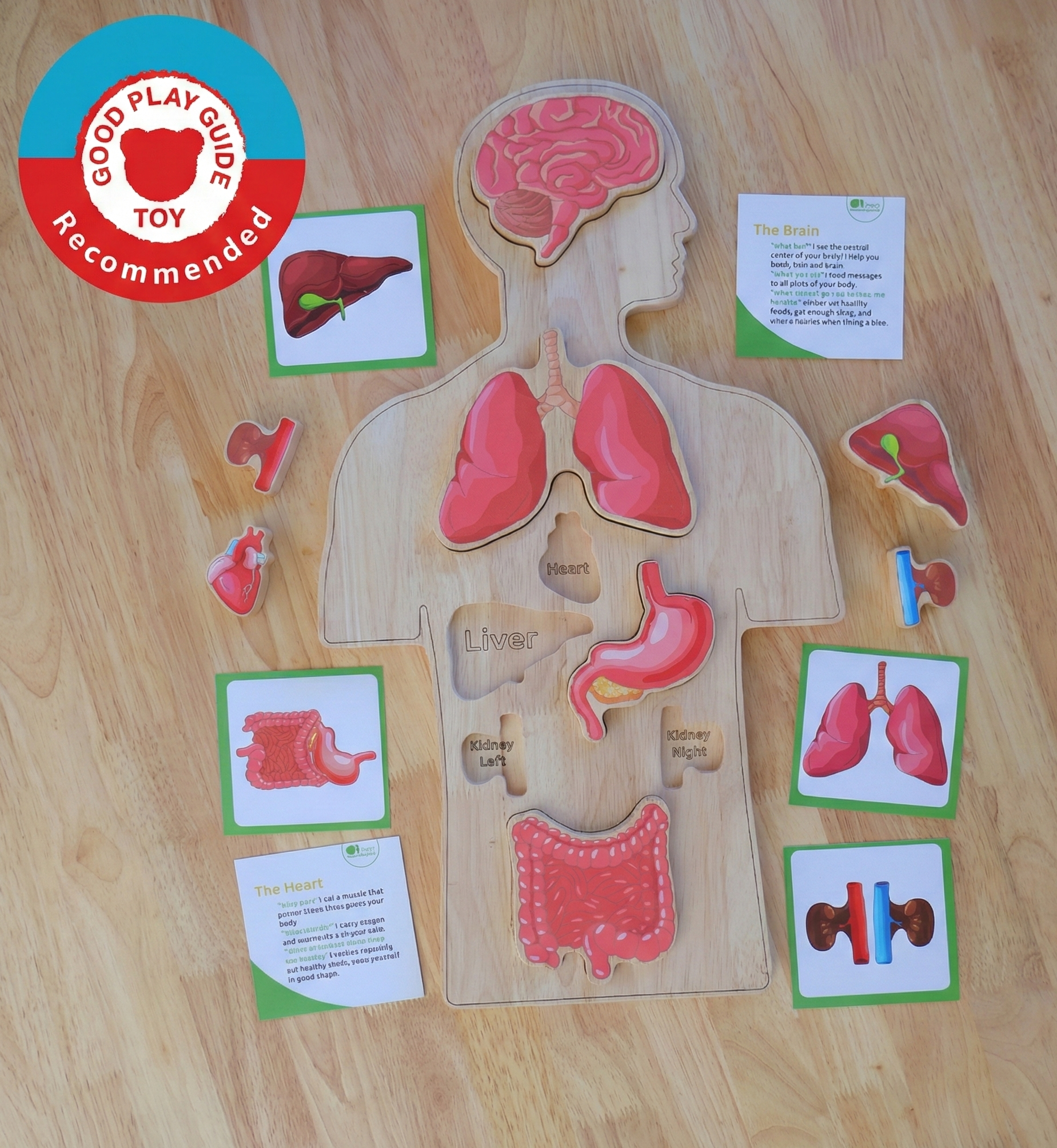
-
The Activity: A child explores the layers of the human body, from skeleton to organs.
-
The Auto-Education: The QToys Wooden Human Body Anatomy Puzzle is often designed with specific recesses for organs. The liver cannot fit where the lungs go.
-
The Result: As the child manipulates the pieces, they build an internal map of their own anatomy. They aren’t memorizing a diagram; they are physically reconstructing the human form.
Why It Matters
When we choose toys that support “Auto-Education,” we are doing more than keeping a child busy. We are building resilience.
A child who is constantly corrected by an adult eventually becomes afraid of making mistakes. A child who is corrected by their environment (the toy) views a mistake simply as data—a clue to try a different way.
By aligning with the Montessori method, QToys helps you raise a child who doesn’t just learn when they are taught, but who learns every time they play.
Ready to foster independence in your home? Explore our full range of self-correcting Montessori toys.